Montessori vs Playgroup in Singapore: Which Is Right for Your Child?
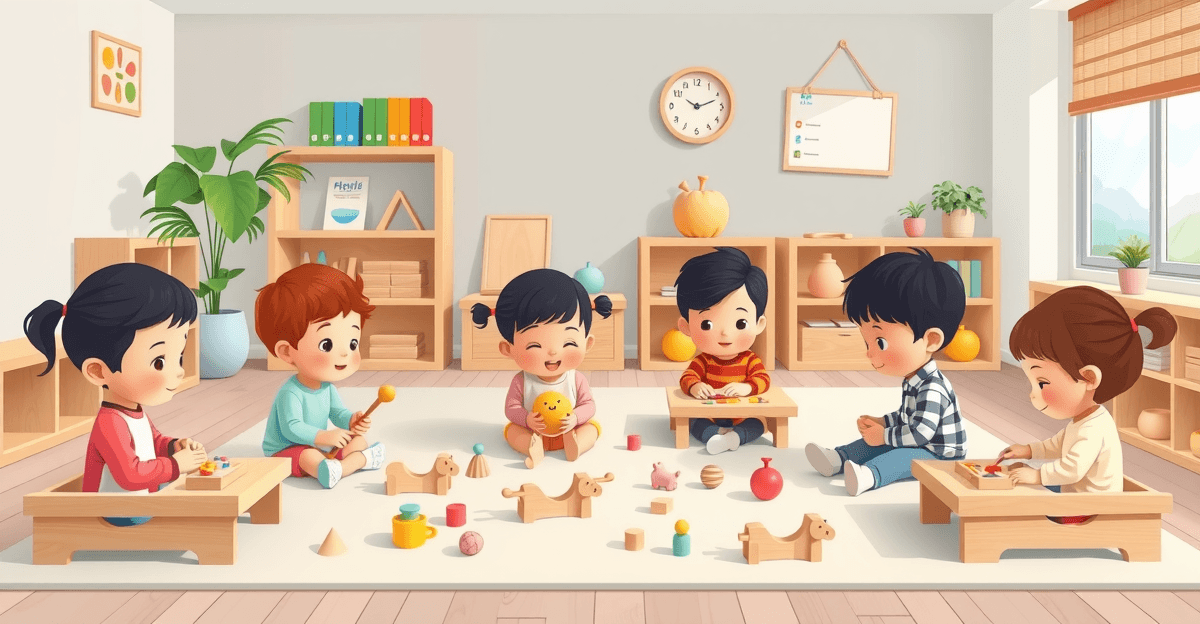
The Great Preschool Debate (That Every Parent Group Has)
In every parent WhatsApp group I've been in, this debate comes up at least once: "Should I put my kid in Montessori or just a regular playgroup?" One camp swears Montessori changed their child's life. The other says it's overpriced and their playgroup kid turned out just as well. We tried both — Montessori for our first, playgroup for our second — and honestly, both were fine. But the decision depends on your child, your budget, and what you value.
Quick Comparison at a Glance
| Aspect | Montessori | Playgroup |
|---|---|---|
| Monthly Cost (Full-time) | SGD $1,200–$2,500+ | SGD $400–$700 (part-time) / SGD $900–$1,500 (full-time) |
| Learning Style | Child-led, structured, self-directed | Play-based, social, flexible |
| Teacher Training | Montessori-certified (usually international qualification) | Early childhood diploma or certificate |
| Class Size | 12–20 children | 10–15 children |
| Curriculum | Montessori Method (sensorial, practical life, academics) | Play-based with emphasis on social-emotional development |
| ECDA Subsidy Eligible | Yes (up to SGD $600/month for lower-income families) | Yes (up to SGD $600/month for lower-income families) |
| Typical Hours | 8 am–6 pm (full-time) | 9 am–12 pm or 2–5 pm (part-time) or extended hours |
What Parents in Singapore Are Really Asking
If you're weighing Montessori against playgroup, you're likely juggling three big questions: Does my child learn better this way? Can I afford it? Will it help them settle into Primary 1? We've talked to hundreds of Singapore parents navigating this choice, and the honest answer is: it depends on your child, your values, and your budget.
Let's break down what each programme actually offers, how much they cost, and which might be the better fit for your family.
---
Understanding Montessori in Singapore
Montessori is a structured, child-centred approach where children learn through hands-on exploration of carefully prepared materials, following their own pace and interests. The method was developed by Dr Maria Montessori in Italy over a century ago, and Singapore has a growing number of certified Montessori centres, particularly in the East and North regions.
How Montessori Works in Practice
In a Montessori classroom, you'll typically see:
- Prepared environment: Shelves of wooden blocks, sensorial materials, mathematical tools, and practical life items arranged at child height
- Self-directed work: Children choose what to work on within a guided structure; no traditional "teacher at the front" lessons
- Mixed age groups: Usually ages 3–6 mixed together so older children mentor younger ones
- Minimal whole-group instruction: Instead, teachers observe and guide individuals or small groups
- Emphasis on concentration and independence: Children work for extended periods on one activity (often 20–30 minutes)
The philosophy behind it is powerful: Children are natural learners who thrive when given freedom within structure, and learning happens best through sensory experience and movement.
Montessori Costs in Singapore (2026)
Montessori centres in Singapore are typically private, so fees are higher than playgroups. Here's a realistic breakdown:
- Full-time (5 days, 8 am–6 pm): SGD $1,200–$2,500+ per month depending on location and centre reputation
- Anchor Operator centres (subsidised Montessori by ECDA): SGD $600–$1,000 per month (significantly cheaper, but limited availability)
- Part-time options: Some centres offer 2–3 day programmes at SGD $800–$1,200/month
- Additional costs: Registration (SGD $200–$500), annual fees, materials levy, meals, and enrichment activities
- Government subsidies do apply to ECDA-registered Montessori centres:
- Lower-income families: up to SGD $600/month subsidy
- Middle-income families: up to SGD $300/month subsidy
- Families must meet income and other eligibility criteria (check the ECDA subsidy page for exact thresholds)
Real example: A full-time Montessori centre in the East charging SGD $1,800/month becomes SGD $1,200/month after a SGD $600 subsidy for eligible families—still steeper than playgroup, but more accessible.
What You're Paying For
- Higher Montessori fees typically reflect:
- Teacher training: Most staff have or are working toward international Montessori certification (expensive, often completed abroad)
- Materials: Authentic Montessori materials are hand-crafted and costly
- Smaller class ratios: Often 12–15 children per guide (vs. 20+ in some playgroups)
- Longer operating hours: Full-time care with extended morning and afternoon programmes
---
Understanding Playgroups in Singapore
Playgroups in Singapore are typically smaller, community-based or centre-based programmes emphasising social play, creative exploration, and early language and social skills. They're often run by community organisations, churches, or private operators and are lighter in structure than Montessori.
How Playgroups Work in Practice
In a typical playgroup, you'll see:
- Play-based learning: Sand, water, art, blocks, imaginative play corners with less intervention from teachers
- Group time: Circle songs, storytelling, music, and movement activities as a whole group
- Social focus: Emphasis on making friends, sharing, turn-taking, and emotional development
- Flexibility: Activities change based on children's interests; no rigid curriculum
- Shorter sessions: Usually 2.5–3 hours in the morning or afternoon (part-time) or extended full-day options
The philosophy: Play is the primary vehicle for learning; young children learn best through unstructured exploration and peer interaction.
Playgroup Costs in Singapore (2026)
Playgroups are significantly more affordable than Montessori, especially for part-time care:
- Part-time (3 half-days, 9 am–12 pm or 2–5 pm): SGD $400–$700/month
- Part-time (5 half-days): SGD $600–$900/month
- Full-time (5 full days, 8 am–6 pm): SGD $900–$1,500/month
- Drop-in sessions: SGD $15–$30 per session at some community playgroups
- Additional costs: Registration (SGD $50–$200), materials, meals (if full-time)
- Government subsidies also apply:
- Lower-income families: up to SGD $600/month subsidy (same as Montessori)
- Middle-income families: up to SGD $300/month subsidy
- Eligibility based on household income and other factors
Real example: A full-time playgroup at SGD $1,200/month becomes SGD $600/month after a SGD $600 subsidy—making it very affordable for eligible families.
What You're Paying For
- Playgroup fees typically cover:
- Teacher training: Usually early childhood diploma or certificate (local qualifications)
- Basic materials and resources: Play equipment, art supplies, toys (less specialised than Montessori)
- Reasonable class sizes: Often 10–15 children per adult, though some operate larger groups
- Flexibility and community: Often connected to community networks, parent involvement, and casual structure
---
Key Differences: Which Matters for Your Child?
Learning Philosophy & Pace
- Montessori: Child leads the pace; learning is individualised and self-directed. Your child learns when they're ready, not on a timetable.
- Playgroup: Teacher guides activities; learning happens through observation and group participation. Pace is more community-oriented.
Which suits your child? If your child is independent, loves focused, quiet activities, and prefers to learn at their own pace, Montessori may click. If your child is social, energetic, and learns better through group play and experimentation, playgroup might be the better fit.
Curriculum & Academic Readiness
- Montessori: Structured curriculum covering practical life, sensorial development, language, and mathematics. By age 5–6, many Montessori children are reading and doing advanced maths.
- Playgroup: No formal curriculum; focus on social-emotional skills, language exposure through play, and early literacy/numeracy through games and songs.
Honest truth: Both approaches prepare children for Primary 1, but in different ways. ECDA research shows that quality matters more than the specific programme. A high-quality playgroup with warm, responsive teachers produces children just as ready for primary school as a Montessori centre. The difference is often more about individual learning style than educational outcomes.
For more on bridging the gap to Primary 1, check out ParentLah's guide on preparing your child for the transition.
Cost Comparison Over Time
Let's say your child attends from age 3 to 6 (3 years):
- Montessori:
- Full-time at SGD $1,800/month: SGD $64,800 gross (or ~SGD $43,200 after average subsidies)
- Playgroup:
- Part-time at SGD $600/month: SGD $21,600 gross (or ~SGD $10,800 after average subsidies)
- Full-time at SGD $1,200/month: SGD $43,200 gross (or ~SGD $21,600 after average subsidies)
The cost difference is real, especially over three years. If your family budget is tight, playgroup offers excellent value. If you can comfortably afford Montessori and it aligns with your child's learning style, the investment is meaningful but not necessarily "better" in terms of school readiness.
For a deeper look at education costs, read our breakdown of saving for your child's education in Singapore.
---
ECDA Registration & Safety: Both Are Regulated
Both Montessori centres and playgroups in Singapore must be registered with the Early Childhood Development Agency (ECDA) (or operating under exemptions for religious/community organisations).
- Key standards both must meet:
- Teacher qualifications: Staff ratios and minimum qualifications (both check ECDA guidelines)
- Safety & hygiene: Regular inspections, cleanliness, accident reporting
- Child protection: Background checks, child safeguarding policies
- Curriculum transparency: Centres must communicate learning approaches to parents
Verification tip: Before enrolling, ask to see the centre's ECDA certificate and latest inspection report. Both types of programmes are equally regulated in terms of safety.
---
Making Your Decision: 5 Practical Questions to Ask
1. What's Your Child's Temperament?
- Structured, focused, independent learner → Montessori may be ideal
- Social, energetic, learns through play → Playgroup may be the better fit
- Adaptable, thrives in either setting → Either works; prioritise cost and convenience
2. What's Your Family Budget?
If cost is your primary constraint, playgroup offers outstanding value, especially with subsidies. If you have flexibility and Montessori genuinely appeals, it's worth the investment—but it's not necessary for school readiness.
Consider your overall cost of raising a child in Singapore when making this decision.
3. What Are Your Long-Term Educational Goals?
- Want a structured, academic foundation early on? → Montessori
- Prefer a gentle, play-based approach with no pressure? → Playgroup
- Unsure? → Playgroup first; you can transition to Montessori later if needed (though switching isn't ideal)
4. What's Available in Your Location?
Singapore's Montessori centres are concentrated in the East, North, and Central regions. If you live in the West, playgroup options may be more convenient. Check availability and travel time—it affects family stress and sustainability.
5. Can You Visit Both?
- This is non-negotiable. Visit a Montessori centre and a playgroup during actual class time. Watch how children engage, interact with teachers, and respond to the environment. Ask:
- Do the children look happy and engaged?
- How do teachers respond to children's questions and needs?
- Is the space clean, safe, and well-organised?
- Do parents feel welcome to observe and ask questions?
Your gut instinct matters. If your child gravitates toward one environment, that's valuable data.
---
Real-World Scenarios: Which Might Suit Your Family?
Scenario 1: Priya (Age 3.5, First Child, Budget-Conscious)
Priya's parents earn a combined SGD $6,500/month. She's social, loves other children, and her parents want affordability without sacrificing quality.
Recommendation: Playgroup. Why? Priya is social and will thrive in a play-based setting. Her family's combined income of SGD $6,500/month falls in the SGD $3,001–$7,500 bracket, qualifying for an ECDA subsidy of up to SGD $300/month, bringing a full-time playgroup at SGD $900/month to ~SGD $600/month. She'll develop strong social-emotional skills and peer relationships. Her parents can allocate savings to education funds or their own security.
Scenario 2: Amir (Age 4, Independent Learner, Comfortable Budget)
Amir is quiet, loves focused activities, and often spends 20+ minutes on one puzzle or building task. His parents earn SGD $10,000+/month and value structured learning.
Recommendation: Montessori. Why? Amir's temperament is a natural fit for Montessori's self-directed, focused approach. The prepared environment will engage his independent streak. His family can afford the SGD $1,200+/month cost. Even without subsidies, the investment aligns with their educational philosophy.
Scenario 3: Maya (Age 2.5, Unsure, Mixed Priorities)
Maya's parents want flexibility—one parent works full-time, the other part-time. They're unsure about Montessori's philosophy and want to ease in gently before Primary 1.
Recommendation: Start with playgroup (part-time, 3 days/week). Why? Flexible, affordable, lower commitment while the family settles. Her parents can transition to full-time playgroup or explore Montessori at age 4 if it feels right. No pressure, and the entry cost is lower.
---
Preparing for Primary 1: Do You Need Montessori?
This is the big question parents ask, and here's the honest answer: No, you don't need Montessori to prepare your child for Primary 1.
Singapore's Primary 1 curriculum doesn't assume Montessori experience. Children from all early childhood backgrounds transition successfully. What matters more:
- Emotional readiness: Can your child separate from you, follow instructions, and regulate emotions?
- Social skills: Can they play with others, take turns, and communicate?
- Pre-literacy/numeracy: Exposure to books, counting, writing (both playgroups and Montessori cover this)
- Self-care: Can they use the toilet, eat independently, and manage their belongings?
Both playgroups and quality Montessori centres develop these skills. The difference is stylistic, not fundamental.
If your child is thriving in a playgroup, there's no need to switch to Montessori just for "academic readiness." If they're in Montessori, they'll transition fine to a traditional Primary 1 classroom.
---
The Cost Reality: Subsidy Your Family Can Access
Singapore offers substantial support for early childhood care. As of 2026, subsidy levels depend on your household income:
| Monthly Household Income | ECDA Subsidy (Monthly) |
|---|---|
| Up to SGD $3,000 | Up to SGD $600 |
| SGD $3,001–$7,500 | Up to SGD $300 |
| Above SGD $7,500 | No government subsidy (but some centres offer their own discounts) |
- Baby Bonus: If you have a newborn, you receive a Baby Bonus Cash Gift of SGD $11,000 (1st and 2nd child) or SGD $13,000 (3rd child onwards). You can use this for childcare. Read our Baby Bonus calculator guide to understand your entitlements.
- Child Development Account (CDA): Your child receives a CDA First Step Grant of SGD $5,000 automatically. The government then co-matches dollar-for-dollar your savings into the CDA, up to SGD $4,000 (1st child), SGD $7,000 (2nd child), or SGD $9,000 (3rd+ child)
- Pioneer and Merdeka Generation: Extra SGD $100/month subsidy if eligible
- Diverse Learner Grant: SGD $400/month additional support if your child has identified developmental needs
Check your eligibility on the ECDA website, and apply early—processing takes time.
---
When to Transition or Switch
If you start with a playgroup, can you switch to Montessori later?
- Yes, but it's not ideal mid-stream. Most transitions happen:
- Age 3–3.5: Before formal learning begins; easier adjustment
- End of Year (June/July): During school holiday transitions
- Start of new year: Most natural reset point
If you're thinking of switching, do so before age 4.5 to give your child time to adjust before Primary 1 entry at age 7.
If you start with Montessori, do you need to continue through age 6?
- No. Many Montessori parents transition their children to mainstream centres or schools at age 5–6 because:
- Montessori is expensive; mainstream is more affordable
- They want to test their child in a traditional classroom before Primary 1
- Their child's needs or family circumstances change
This is perfectly normal and doesn't disrupt school readiness.
---
The Honest Bottom Line
Montessori and playgroup are both legitimate, high-quality early childhood options in Singapore. They're not competing approaches where one is objectively "better"—they're different philosophies suited to different children and families.
- Choose Montessori if you value structured, child-led learning, your child thrives with focus and independence, and you can afford the costs even with subsidies
- Choose playgroup if you prioritise affordability, social play, flexibility, and your child is social and energetic
What matters most: A warm, responsive teacher, a safe environment, peer interaction, and a curriculum that engages your child. You'll find that in both settings.
Visit centres, trust your instinct, and remember—there's no single "right" choice. The best programme is the one where your child is happy, engaged, and secure.
---
FAQs
Q: Will Montessori make my child smarter? A: Montessori can accelerate academic skills (reading, maths) in some children, but "smarter" isn't the goal. Research shows no significant IQ advantage over other quality early childhood programmes. Montessori is better seen as a learning style match than a shortcut to intelligence.
Q: Can I do part-time Montessori + part-time playgroup? A: Some families do this, but it's logistically complex and may confuse your child if the approaches are very different. Better to choose one primary setting.
Q: Is ECDA subsidy automatic, or do I need to apply? A: You must apply. Subsidies are not automatic. Submit your application to the centre or via ECDA's portal; income verification takes 2–4 weeks. Apply early, as some centres have limited subsidy places.
Q: What if my child doesn't like the first programme I chose? A: Some adjustment time (2–4 weeks) is normal. If serious unhappiness continues after a month, a change is worth considering. It's not ideal, but your child's wellbeing comes first.
Q: Do I need to declare ECDA fees in my tax return? A: Childcare expenses are not directly deductible for personal income tax in Singapore. However, if you're self-employed or a partner in a business, check with IRAS for business-related childcare deductions. Read more in our government grants guide.
---
Sources
1. Early Childhood Development Agency (ECDA) – Subsidy Information — Official information on ECDA subsidies, income thresholds, and application processes.
2. Ministry of Education (MOE) – Primary 1 Registration & Admission — Information on Primary 1 entry requirements and school readiness criteria.
3. Ministry of Social and Family Development (MSF) – Financial Assistance for Families — Overview of government financial assistance programmes for families, including ComCare and other support schemes for lower-income households with childcare needs.
4. IRAS Tax Guide for Parents — Guidance on tax relief and deductions related to childcare and child development.
5. Straits Times – Early Childhood Education in Singapore — Reputable news source for updates on ECDA policies and early childhood trends.
6. MSF – Baby Bonus Scheme — Official Baby Bonus portal with current Cash Gift amounts, CDA co-matching caps, and eligibility criteria.
7. ECDA – Starting Playgroup — Official ECDA guidance on choosing and starting preschool programmes in Singapore, including playgroup and Montessori options.
---
About the Author
The ParentLah Team is a Singapore-based parenting resource dedicated to helping families navigate childcare, education, and finance with practical, data-driven advice. We've surveyed hundreds of Singapore parents and reviewed government policies to bring you honest, relatable guidance.
Have a question about Montessori, playgroups, or early childhood in Singapore? Drop us a message on our contact page or explore more ParentLah guides on schools, enrichment, and family finances.
---
Want to explore other childcare options? Read our guide on childcare options for working parents in Singapore or check out TuitionLah for enrichment and tuition support as your child grows.
Frequently Asked Questions
What's the main difference between Montessori and playgroup in Singapore?
Montessori uses a structured, child-led Montessori Method with specific materials and self-directed learning, while playgroups emphasize unstructured play and social development. Both are ECDA-regulated in Singapore, but Montessori centres follow the international Montessori curriculum, and playgroups focus on play-based learning with more flexibility. Your choice depends on whether you prefer a structured learning environment or a more free-flowing, social setting.
How much do Montessori centres cost compared to playgroups in Singapore?
Playgroups in Singapore typically cost SGD $400–$700 per month for part-time (3–5 half days), while Montessori centres range from SGD $1,200–$2,500+ per month for full-time care. Both are eligible for ECDA subsidies (up to SGD $600/month for lower-income families and up to SGD $300/month for middle-income families), which can significantly reduce out-of-pocket costs. Always check your specific centre's fees and available grants before deciding.
Are Montessori programmes worth the extra cost in Singapore?
Whether Montessori is worth the cost depends on your child's learning style, your budget, and your parenting philosophy. Montessori suits independent, self-motivated learners but isn't proven to produce better academic outcomes than other quality early childhood programmes. If your child thrives with structure and hands-on, sensorial materials, it may be worth the investment; if your priority is social play and affordability, a quality playgroup offers excellent value. ParentLah recommends visiting both types of centres to see what resonates with your child's personality.
You might also like
Get Weekly Parenting Tips
Get practical parenting guides on costs, schools, and subsidies. No spam.
Related Articles
How to Choose a Preschool in Singapore: 10 Things Every Parent Should Check
Choosing a preschool in Singapore? Here are 10 essential things to check — from SPARK certification to fees, subsidies, curriculum, and what really matters day-to-day.
Best Kindergartens in Singapore 2026: How to Choose the Right One
Complete guide to choosing kindergartens in Singapore 2026. Real costs, subsidy amounts, programme comparisons, and practical tips for working parents.
Best Preschools in Singapore 2026: Honest Comparison & Pricing
A practical comparison of Singapore's top preschool options including PCF, NTUC, MOE Kindergarten, PAP, and private preschools with real pricing and parent feedback.