Speech Therapy for Toddlers in Singapore: Signs, Costs & Where to Go
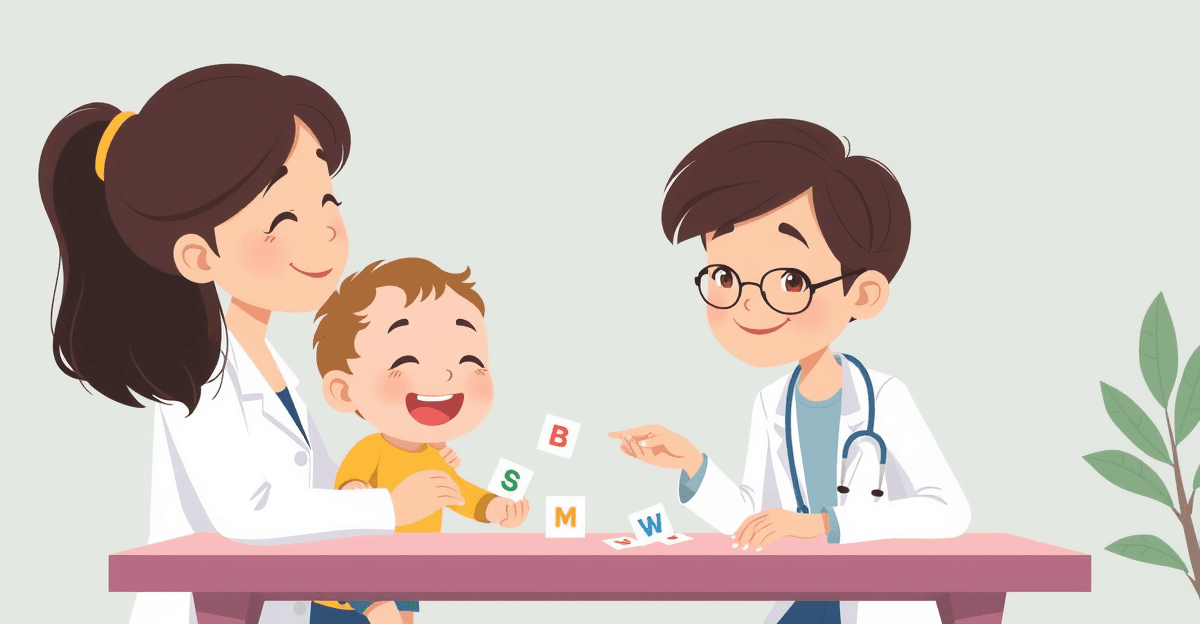
The Phone Call That Started Our Speech Therapy Journey
When our daughter's preschool teacher called to "have a chat" about her speech, my stomach dropped. She was 2.5, barely stringing two words together while her classmates were having full conversations. "She's bright," the teacher said, "but she's really struggling to express herself, and it's starting to frustrate her."
That phone call led to a polyclinic referral, a 3-month wait for assessment, and eventually a diagnosis of "expressive language delay." If I'd known what I know now, I would have started the process six months earlier.
Quick Summary
- Watch for: Fewer than 50 words by age 2, not understanding simple instructions, difficulty with sounds (p, b, m, t, d, n)
- Cost: SGD 100–250 per private session; subsidised rates from SGD 10–40 through ECDA if you qualify
- Subsidies available: Up to 100% cost coverage for low-income families; means-tested through MOH/ECDA
- Where to go: ECDA Early Intervention Programme (free assessment), polyclinics, or private speech therapists registered with AHPC
- Early action pays off: Children who start therapy before age 3 show better outcomes by school entry
---
Is My Toddler's Speech Development Normal? Common Milestone Signs
Speech development follows a fairly predictable pattern, but every child is unique. Here's what to expect—and when to raise a concern with your child's health visitor or doctor.
- By 12 months:
- Babbling (ba-ba, da-da, ma-ma)
- Responding to their name
- Understanding simple words like "no" or "bye"
- By 18 months:
- 10–50 words (names, "mama," "up," "no")
- Following one-step instructions ("Get your shoes")
- Pointing at objects when you name them
- By 2 years (24 months):
- 50–300 words
- Two-word phrases ("more milk," "daddy home," "all gone")
- Asking simple questions ("What's that?")
- Understanding simple stories
- By 3 years:
- 200–1,000 words
- Simple sentences ("I want juice")
- Asking lots of "why" questions
- Most sounds are clear to familiar people
If your child is consistently behind these milestones—or you notice they were developing normally but have lost skills—it's time to seek an assessment. Speech delays are one of the most common developmental concerns in young children, affecting roughly 5–8% of toddlers globally, and early intervention can make a real difference.
---
Red Flags: When Should I Seek Speech Therapy?
Not every late talker needs therapy, but certain warning signs warrant a professional evaluation. Singapore's Ministry of Health (MOH) and Early Childhood Development Agency (ECDA) recommend a speech assessment if:
Language Delays
- Fewer than 50 words by age 2 (beyond the typical range)
- Not combining words by age 2.5 years
- Losing language skills they once had (regression)
Speech Sound Issues
- Difficulty with common sounds: p, b, m, t, d, n, g, k (most toddlers struggle with these at first, but if they persist beyond age 3–4, check in)
- Speech hard to understand even to close family by age 3
Comprehension & Social Concerns
- Not understanding simple, age-appropriate instructions ("Get your shoes")
- Not responding to their name consistently by 12–15 months
- Difficulty following along with songs, stories, or group time
- Limited eye contact or social engagement
Feeding or Mouth Movement Issues
- Difficulty chewing or swallowing
- Excessive drooling beyond age 2
- Mouth breathing or tongue thrust
The key insight: Early identification matters. Children who receive speech therapy before age 3 show significantly better outcomes by school entry than those who start later. In Singapore's education system, where English proficiency is critical, addressing speech delays early sets your child up for success.
---
How Much Does Speech Therapy Cost in Singapore?
Let's be real about the money side—it's a question every parent asks, and costs vary wildly depending on where you go and your eligibility for subsidies.
Private Speech Therapy Costs
- SGD 100–250 per session is the typical range for private speech therapists in Singapore, depending on:
- Location: Central areas (Orchard, Novena, East Coast) tend toward the higher end (SGD 180–250); suburban areas are often SGD 100–150
- Therapist experience: New graduates might charge SGD 100–130; senior therapists or those with specialist certifications (autism, childhood apraxia) often charge SGD 200–250
- Session length: Most sessions are 45–60 minutes
- Frequency: A typical programme runs 1–2 sessions per week
Annual cost estimate (private): If your child attends 1 session per week at SGD 150, expect to spend around SGD 7,800 per year. Twice weekly would be SGD 15,600—a significant commitment for most families.
Government-Subsidised Therapy (Much More Affordable)
If you qualify, government-subsidised rates are dramatically lower:
- ECDA Early Intervention Programme (EIP):
- Free or subsidised assessment
- Subsidised therapy sessions: SGD 10–40 per session depending on household income
- Income-based subsidy tiers:
- Polyclinics (MOH):
- Speech therapy available at selected polyclinics (Ang Mo Kio, Bedok, Bukit Merah, Clementi, Geylang, Jurong, Queenstown, Tampines, Woodlands)
- Cost: Around SGD 10.50–20 per visit plus consultation fees
- Referral required from your GP or child health clinic
- Typically longer wait times (4–8 weeks) but excellent quality
- Speech Therapy in Hospitals:
- KK Women's and Children's Hospital (KKH): SGD 30–50 per session
- National University Hospital (NUH): SGD 30–50 per session
- Referral from GP or polyclinic usually required
Subsidy Reality Check
Here's the honest truth: if your household income is below SGD 4,500 per month, you likely qualify for significant subsidies—sometimes 50–100% of costs. This transforms speech therapy from a luxury to an accessible service. However, you do need to apply and get formally assessed.
Pro tip: Many families assume they won't qualify for subsidies. Even if you're comfortably middle-income, you may still get 30–50% cost coverage through ECDA or health insurance schemes—tools like MoneySmart's insurance comparison can help you check what's covered. Always ask.
---
Where to Find Speech Therapists in Singapore
Government & Subsidised Options
- 1. ECDA Early Intervention Programme (EIP)
- What it is: Free developmental screening and subsidised early therapy for children 0–6 years
- Cost: Free initial assessment; subsidised sessions based on income (SGD 10–40 typically)
- How to access: Contact your nearest ECDA centre or call the ECDA helpline at 6311 2888
- Pros: Highly affordable, qualified therapists, can start quickly
- Cons: May have waiting lists in popular areas; therapy can be group-based
- 2. MOH Polyclinics
- Polyclinics offering speech therapy: Ang Mo Kio, Bedok, Bukit Merah, Clementi, Geylang, Jurong, Queenstown, Tampines, Woodlands
- Cost: SGD 10.50–20 per visit (consultation fees separate)
- How to access: Referral from your GP or child health clinic visit
- Pros: Very affordable, government-backed quality
- Cons: Longer wait times (4–8 weeks); limited appointment slots
- 3. KK Women's and Children's Hospital (KKH) Speech Pathology Services
- Cost: SGD 30–50 per session (specialist consultation may cost more)
- How to access: GP referral or self-referral through outpatient clinic
- Pros: Excellent specialists, can manage complex cases
- Cons: Longer wait times; higher costs than polyclinics
Private Speech Therapy Options
Finding a qualified private therapist:
- Look for therapists who are:
- Registered with the Allied Health Professions Council (AHPC) — the local regulatory body under MOH
- Certified by RCSLT (Royal College of Speech and Language Therapists, UK) or ASHA (American Speech-Language-Hearing Association)
- Bachelor's degree or higher in Speech-Language Pathology
- Where to find them:
- Google Maps / Web search: Search "speech therapist Singapore" + your area (Orchard, East Coast, Jurong, etc.)
- AHPC public register: Check the Allied Health Professions Council website (healthprofessionals.gov.sg/ahpc) for registered Speech-Language Pathologists
- Facebook parent groups: Singapore parenting groups often have recommendations; ask for referrals
- Preschools & paediatricians: Your child's preschool or GP can often refer you to trusted therapists they work with
- Private therapy centres: Dedicated speech and occupational therapy clinics (e.g., speech therapy centres in Orchard, East Coast, Jurong areas)
Interview questions to ask: 1. Are you registered with AHPC or certified by RCSLT/ASHA? 2. How many years of experience do you have, especially with toddlers? 3. What is your typical session structure and frequency recommendation? 4. Do you provide parent coaching (research shows this is key to better outcomes)? 5. Can you provide references or case examples (respecting confidentiality)? 6. What is your cancellation policy?
---
What Happens During a Speech Therapy Assessment?
Knowing what to expect can ease your anxiety. Here's a typical assessment flow:
Initial Appointment (30–60 minutes): 1. Case history: Questions about your child's development, health, family history, and concerns 2. Observation: Therapist watches your child play, interact, and respond 3. Informal play-based assessment: No "testing"—the therapist plays games, looks at books, and listens to how your child communicates 4. Formal testing (if age-appropriate): Standardised tests like the Mullen Scales of Early Learning or PLS-5 (Preschool Language Scale) to measure language skills against age norms
- Outcome:
- Summary of findings (speech/language strengths and needs)
- Recommendations: therapy needed or "watch and wait"
- If therapy is advised: frequency, duration, and focus areas
- Discussion of parent strategies (most important—therapy outcomes improve 50–100% when parents are coached and reinforce skills at home)
- Cost of assessment:
- Private: SGD 100–200
- ECDA/polyclinic: Free or SGD 10–20
- Some therapists offer free phone consultations first to discuss concerns
---
Government Subsidies & Support: How to Qualify
Singapore offers several schemes to support early childhood development and healthcare costs. Here's what's available:
ECDA Subsidies for Early Intervention
- Eligibility:
- Child aged 0–6 years
- Singapore citizen or PR
- Household income below SGD 4,500/month (for subsidy; higher incomes may access services without subsidy)
- Subsidy tiers:
- SGD ≤1,200/month: Up to 100% subsidy
- SGD 1,200–2,000/month: Up to 75% subsidy
- SGD 2,000–4,500/month: Up to 50% subsidy
How to apply: Contact your nearest ECDA centre or call the ECDA hotline at 6311 2888.
Baby Bonus (For Cost of Raising a Child)
While not specifically for therapy, the Baby Bonus provides cash gifts (SGD 11,000–13,000 depending on child's birth order, as enhanced in 2023), a CDA (Child Development Account) First Step Grant of SGD 5,000 for all children, and government co-matching of SGD 3,000–15,000 depending on birth order. Some families use this to cover therapy costs.
Learn more: Complete List of Government Grants for New Parents in Singapore (2026)
MediSave & Health Insurance
Some health insurance plans (e.g., Integrated Shield Plans) cover speech therapy costs. You can compare insurance plans on SingSaver to check if your policy includes therapy coverage.
---
What Can You Do at Home? Parent-Coaching Strategies
Here's the reality: therapy happens 2–3 hours per week in a clinic, but your child spends 100+ hours at home. Research consistently shows that children whose parents are coached on speech strategies make significantly faster progress than those relying on clinic sessions alone.
Simple, Evidence-Based Strategies
- 1. Model & Expand (The Most Powerful Technique)
- What: When your child says a word or sound, repeat it correctly and add one more word
- Example: Child says "up." You say, "Yes, up high!" or "Up stairs?"
- Why it works: Exposes your child to language in context without pressure to perform
- 2. Create Opportunities to Communicate
- Leave desired items (toys, snacks) slightly out of reach so your child has to ask or point
- Pause during routines (waiting for them to ask for "more" during meals)
- Play games that repeat the same words (peek-a-boo, tickles, bouncing rhymes)
- 3. Read Together Daily
- 20–30 minutes of shared picture books (if you need to build a home library, you can grab affordable picture book sets on Shopee)
- Point and name objects; let your child turn pages
- Ask simple questions: "Where's the dog?" "What's that sound?"
- Don't worry about finishing the book—repetition and engagement matter most
- 4. Sing & Rhyme
- Nursery rhymes (Twinkle Twinkle, Humpty Dumpty) expose language patterns and sounds
- Action songs (If You're Happy and You Know It) link words with movement
- Repeat favourite songs multiple times—repetition is how toddlers learn
- 5. Talk Through Routines
- Narrate daily activities: "Now we're putting on your shoes. Left shoe, right shoe."
- Use shorter sentences (2–4 words) for toddlers under 2.5 years
- Slow down your speech slightly and use a higher, musical voice
- 6. Reduce "Test Questions"
- Avoid asking questions you already know the answer to ("What colour is this?")
- Instead, use comments: "I see a red car!" This feels more natural and less pressurising
- If you do ask questions, give your child 5–10 seconds to respond before answering yourself
---
Real Cost Breakdown: What to Budget
Here's a realistic annual cost scenario for different family situations:
Scenario 1: Using ECDA Subsidy (Monthly income SGD 2,500)
- Initial assessment: Free
- Therapy sessions: 1 per week × 52 weeks × SGD 20 (50% subsidy) = SGD 1,040/year
- Total: ~SGD 1,040
- Plus: Your time and parent coaching (no cost, but commitment required)
Scenario 2: Private Therapy (Comfortable Income, No Subsidy Eligibility)
- Initial assessment: SGD 150
- Therapy sessions: 1.5 per week × 52 weeks × SGD 150 = SGD 11,700/year
- Total: ~SGD 11,850
- Plus: Potential income tax relief if registered as health/education expense (check IRAS)
Scenario 3: Mixed Approach (Polyclinic + Parent Coaching)
- Initial GP referral & polyclinic assessment: SGD 20–30
- Polyclinic sessions: 1 per week × 52 weeks × SGD 15 = SGD 780/year
- Parent coaching workshop (ECDA/private): SGD 50–100
- Total: ~SGD 850–930
- Good value, though longer wait times
---
Timeline: How Long Does Speech Therapy Take?
Progress depends on your child's age, the severity of delay, consistency of therapy, and family involvement. Here's what research suggests:
| Situation | Timeline |
|---|---|
| Mild expressive delay, age 2–2.5, 1–2 sessions/week + strong parent coaching | 6–12 months |
| Moderate delay, age 2.5–3, 2 sessions/week + parent involvement | 12–18 months |
| Severe delay or multiple areas (speech + comprehension), any age | 18–24+ months; ongoing monitoring recommended |
| Typical catch-up by school entry (age 4–5) if started before age 3 | Very likely if consistent therapy + parent support |
---
Frequently Asked Questions: Parent Concerns About Speech Therapy
Q: "Is it just a phase? Should I wait and see?" A: Some late talkers do catch up on their own—research suggests 10–30% of 2-year-olds with expressive delays resolve without intervention. However, waiting is risky. If your child is beyond the typical range and you're concerned, a free assessment costs nothing and provides clarity. Early therapy is far cheaper and more effective than remedial services later. Don't rely on hope; get data.
Q: "Will speech therapy interfere with my child's bilingual development?" A: No. Speech therapists in Singapore are experienced with multilingual children (English, Mandarin, Malay, Tamil families are common). In fact, speech therapists recommend consistent language exposure in both languages. A good therapist will work with your home language, not against it. If anything, bilingualism supports cognitive development—not a reason to delay therapy.
Q: "Can I just use apps like Duck Duck Moose or speech therapy apps instead of a real therapist?" A: Apps are a supplement, not a replacement. Research shows apps work best when paired with adult interaction and real-world language practice. A qualified therapist provides individualised assessment, identifies underlying issues (like oral-motor weakness), and coaches parents on targeted strategies. Apps alone miss these nuances. Think of it this way: apps are like homework; the therapist is like the teacher.
Q: "My child is shy and won't talk to the therapist. Is therapy pointless?" A: Not at all. A good therapist is trained to work with shy or anxious children—they'll play, observe, and gradually build rapport over sessions. Many children who are quiet in the clinic actually show progress at home. The assessment and parent coaching are still valuable even if your child doesn't perform in the session. Shyness and language delay are different things.
Q: "Will my child be labelled or stigmatised if we pursue therapy?" A: In Singapore's preschools and primary schools, seeking early intervention is increasingly normalised and even encouraged. Schools have trained staff to support children with speech needs. Early identification is not stigmatisation—it's parental advocacy and good planning. By contrast, waiting until primary school when a child struggles academically is far more disruptive.
---
Related Resources on ParentLah
As you think about your child's overall development and costs, these guides might help:
- How Much Does It Cost to Raise a Child in Singapore? (2026 Breakdown) — Speech therapy is just one of many costs; this breakdown shows the full picture of raising a child in Singapore.
- Childcare Options for Working Parents in Singapore — If your child is in childcare, communication with your centre about speech concerns is crucial; this guide covers your options.
---
Key Takeaways: What Every Parent Should Know
1. Speech development milestones are real, but timelines vary. If your toddler is consistently behind peers or losing skills, get a professional assessment—it's worth the investment.
2. Early intervention (before age 3) is your biggest advantage. Children who start therapy early typically catch up fully by school entry; those who wait often need longer, more intensive support.
3. Singapore offers affordable, subsidised speech therapy through ECDA and polyclinics. If your household income is below SGD 4,500/month, you likely qualify for 50–100% cost subsidies. Even if you don't qualify, private therapy with a qualified AHPC-registered therapist runs SGD 100–250 per session.
4. Parent involvement is the secret ingredient. A therapist sees your child 1–3 hours per week; you see them 100+ hours. Therapy is exponentially more effective when parents are coached on strategies and practice them daily.
5. Don't assume or guess—ask questions and get referrals. Your GP, child's preschool, and ECDA helpline (6311 2888) can all point you toward qualified therapists and subsidies you may not know about.
Your child's communication is foundational to learning, confidence, and social connection. If you have doubts, a conversation with a speech therapist—even a free initial consultation—is a worthwhile investment in your child's future.
---
Sources
1. ECDA Early Intervention Programme (EIP) — Early Childhood Development Agency — Government-funded early assessment and therapy subsidies for children 0–6 years with developmental concerns.
2. MOH Speech Therapy Services at Polyclinics — HealthHub Singapore portal listing speech therapy availability at MOH polyclinics and referral pathways.
3. Allied Health Professions Council (AHPC) — Find Registered Speech-Language Pathologists — MOH-administered council overseeing speech-language pathologist registration in Singapore; verify professional credentials here.
4. Baby Bonus & Child Development Account (CDA) — Baby Bonus Singapore — Official portal for the Baby Bonus scheme; government cash gifts and CDA co-matching grants available to parents for child development and education expenses.
5. KK Women's and Children's Hospital (KKH) Speech Pathology Clinic — Specialist paediatric speech and language pathology services with detailed clinic information and referral processes.
Frequently Asked Questions
At what age should I be concerned about my toddler's speech development?
By 18–24 months, toddlers typically say 10–50 words; by 2 years, most can combine two words ('more milk'). If your child is not meeting these milestones or has fewer than 50 words by age 2, it's worth getting a professional assessment. Early intervention before age 3 is crucial—speech delays can impact social skills and school readiness. Don't wait; a free assessment from a speech therapist can give you peace of mind or catch issues early.
How much does speech therapy cost in Singapore, and can I get subsidy?
Private speech therapy costs SGD 100–250 per session (45–60 minutes), with most therapists in central areas charging SGD 150–200. Government-subsidised therapy through ECDA centres costs around SGD 10–40 per session if your child qualifies. If your household income is below SGD 4,500/month, you may be eligible for subsidies covering 50–100% of costs. Always check with your provider and MOH about your eligibility first.
Where can I find a qualified speech therapist in Singapore?
Look for therapists registered with the Allied Health Professions Council (AHPC) or certified by international bodies (RCSLT, ASHA). Government options include polyclinics and ECDA early intervention programmes. Private options include speech therapy centres in Orchard, East Coast, and Jurong, as well as home-based therapists. Ask your child's preschool or GP for referrals—many provide valid recommendations based on outcomes.
You might also like
Get Weekly Parenting Tips
Get practical parenting guides on costs, schools, and subsidies. No spam.
Related Articles
Child Development Milestones: A Singapore Parent's Guide
A practical guide to child development milestones from birth to age 6, with Singapore-specific advice on resources, support, and when to seek help.
Mental Health Awareness for Singapore Children
A practical parent's guide to children's mental health in Singapore — warning signs, MOE school counsellors, CHAT and IMH help, real costs, and subsidies for 2026.
Managing Asthma in Singapore Children
A practical guide to managing asthma in Singapore children — CHAS and MediSave subsidies, haze tips, and school action plans for local parents.